You felt the house move. Maybe it was a quick jolt, maybe a long roll that had the dishes rattling. Now it's quiet again, and everything looks fine. That's exactly when a cracked joint or a loosened gas fitting starts working against you, slow and out of sight.
Colton sits in seismically active country. Even a minor quake shifts pipes a hair, and a hair is enough to crack a soldered joint, pull a fitting loose, or split an old galvanized line under the slab. You won't always hear it or smell it right away.
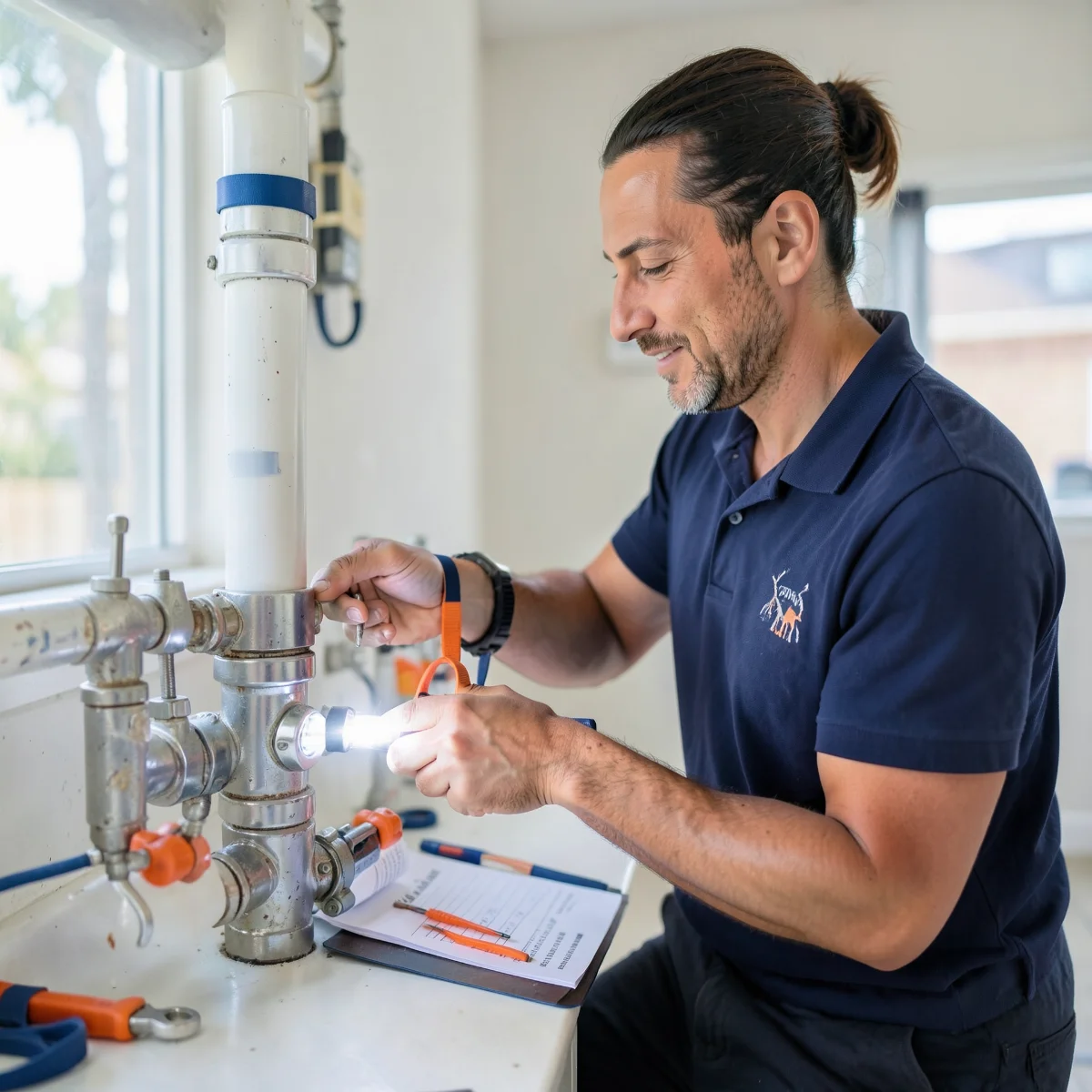
An earthquake plumbing inspection is the straight, no-drama way to find that damage before it floods a crawlspace or leaks gas into your house. We come out, we check the spots that move first, and we tell you what we find.
Why a Quake Can Wreck Plumbing You Can't See
Pipes don't flex much. When the ground shakes, the structure moves one way and the rigid plumbing inside it gets yanked along for the ride. Threaded joints back off a turn. Soldered copper joints develop hairline cracks. The connection between your water heater and its supply lines takes a beating, and so does the gas line feeding it. On Colton's clay and adobe soil, that shaking gets amplified because the ground itself shifts and settles after a jolt.
The trouble is timing. A loosened joint might not leak today. It weeps a little, dries on the outside, then lets go a week later when nobody's watching, usually inside a wall or under the slab where the water has nowhere to go but into your foundation. A nicked gas line is worse, because you can't see gas and you might not smell a slow seep until it's a real problem.
Here's how we fix it. We pressure-test the water lines, eyeball every accessible joint and supply connection, and check the gas line and the water heater straps. If a joint is compromised, we re-make it or replace the section. If the heater shifted or its straps failed, we re-secure it to code. You get a clear picture of what's solid and what isn't, and a flat-rate quote on anything that needs work, no scare tactics.
Signs Your Plumbing Took a Hit
- Water pressure dropped across the whole house after the shaking stopped
- A faint rotten-egg or sulfur smell near the water heater or gas appliances
- Damp spots, warm flooring, or a slab that suddenly feels wet underfoot
- Rust-tinted or cloudy water that wasn't there before the quake
- The water heater looks tilted, shifted, or its mounting straps are loose
- Your water meter keeps creeping even with every faucet shut off