Your water heater is probably the hardest-working thing in your house, and it sits in a corner of the garage where nobody looks at it until the day there's no hot water. Here in Colton, that day comes sooner than it should. Our water is hard, the tank fills with sediment, and most folks never flush it once.
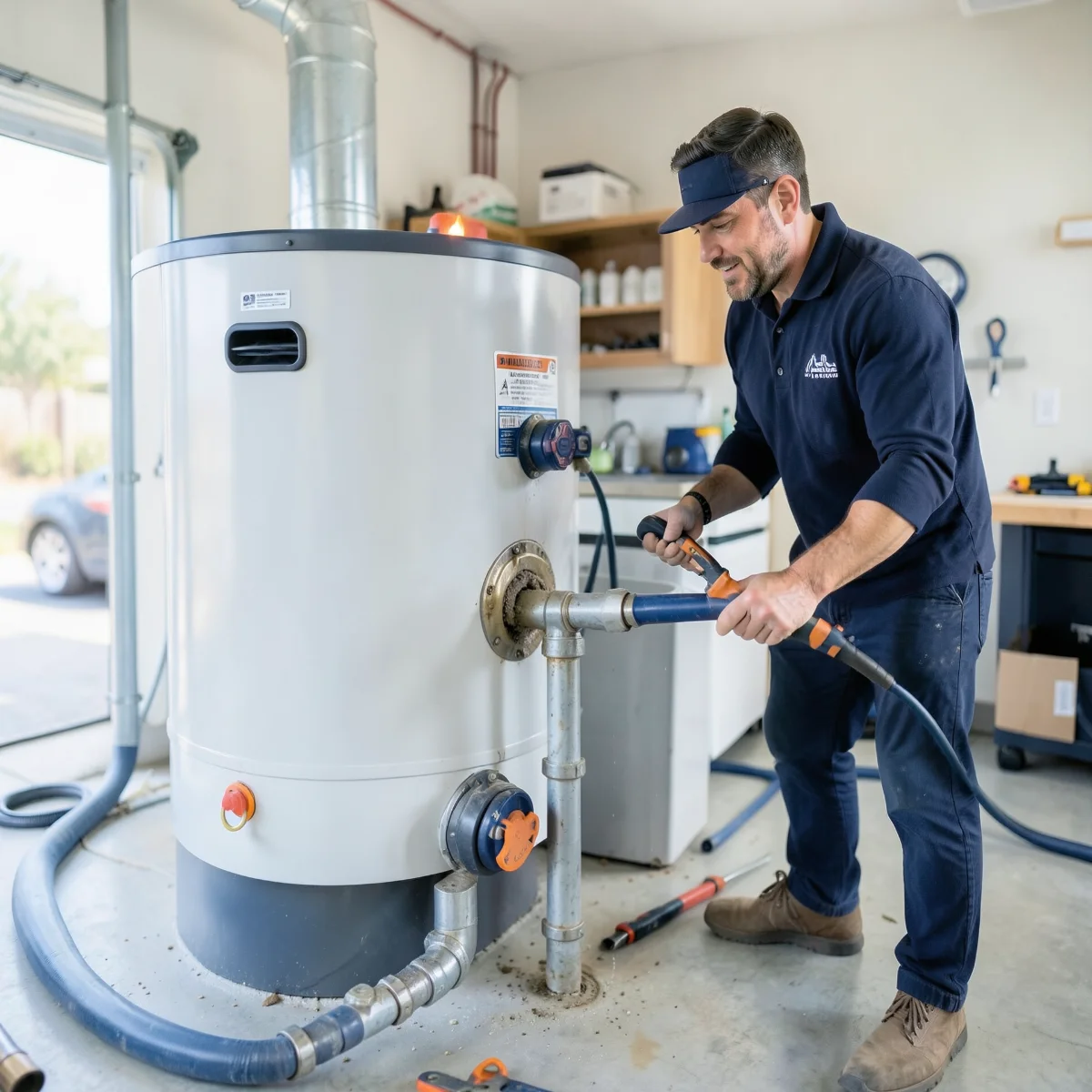
Annual maintenance is the cheapest insurance you'll ever buy on that tank. We flush the sediment, test the TPR valve, check the anode rod, and look the whole unit over. Thirty minutes of attention can add years to a heater that would otherwise quit early.
We're local Colton plumbers, we give you a flat-rate price before we start, and our techs aren't on commission, so nobody's pushing you toward a new tank you don't need. Same-day slots open up most weeks.
Why Colton Water Heaters Wear Out Early
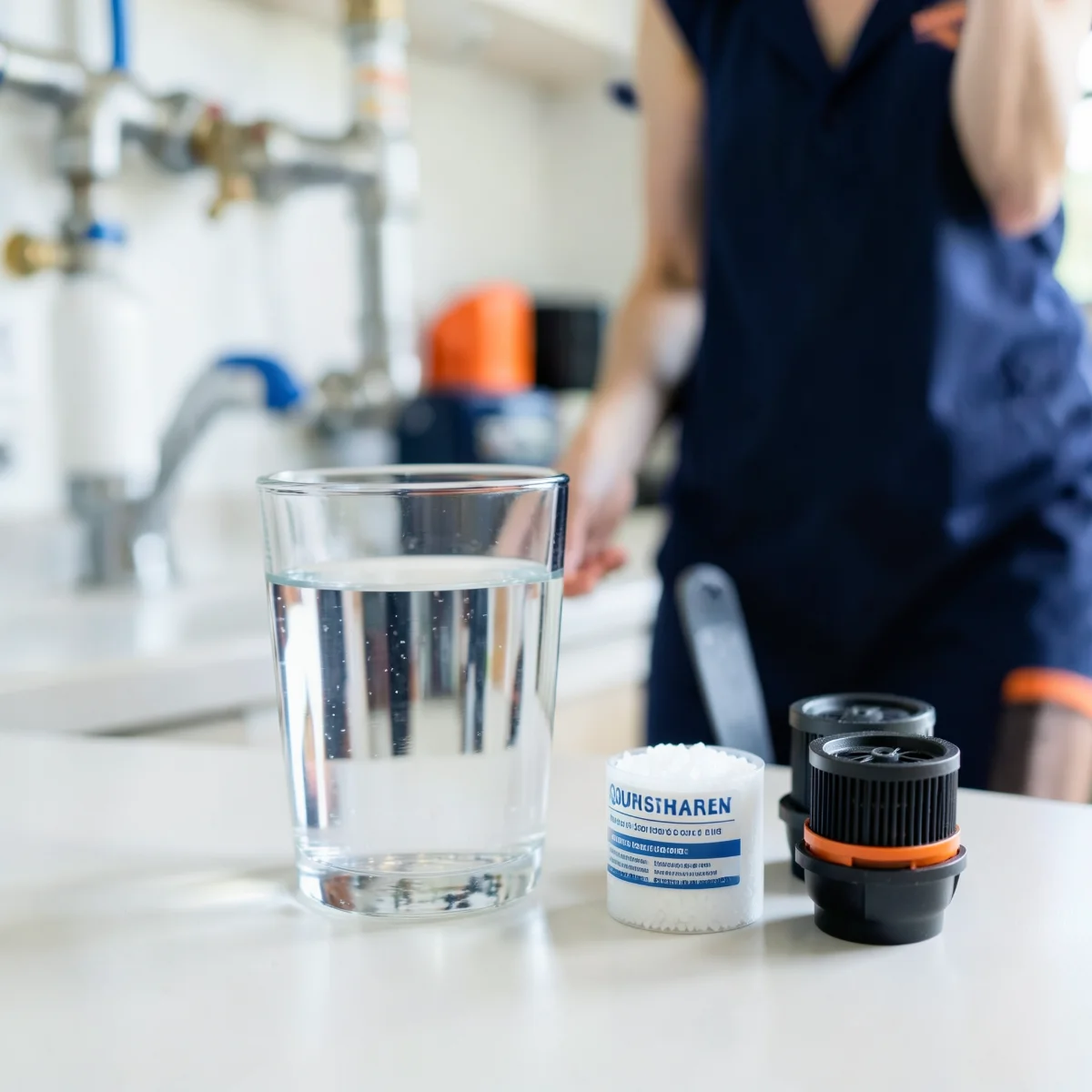
It comes down to our water. The Inland Empire runs hard, mineral-heavy water, and every gallon that flows through your heater leaves a little calcium and lime behind. Over the years that builds into a crust of sediment on the bottom of the tank. On a gas unit, that sediment sits between the burner and the water, so the flame has to fire longer and hotter to heat through it. That's the popping and rumbling you hear, and it's the reason your gas bill creeps up while your showers get shorter.
Left alone, the heat cooks the steel from the inside, the anode rod burns out, and the tank starts rusting from within. Once that happens there's no fixing it, you're buying a new heater. We stop that clock. A proper flush pulls the sediment out through the drain, a fresh anode rod takes the corrosion hit so the tank doesn't have to, and a tested TPR valve makes sure the thing can't build dangerous pressure.
We do it the right way, not a quick rinse. We drain the tank down, break the sediment loose, run it clear, and check every connection and the temperature setting on the way out. You get a heater that runs quieter, heats faster, and lasts the way it was supposed to.
Signs Your Water Heater Is Overdue
- Popping, rumbling, or crackling sounds when it heats up
- Hot water runs out faster than it used to
- Rusty or cloudy water from the hot tap
- It's been more than a year since the tank was flushed
- Higher gas or electric bill with no change in usage
- Moisture, rust streaks, or a small puddle near the base