Your water bill jumped and nobody left a faucet running. There's a warm spot on the floor, or a patch of grass in the yard that stays green when everything else is brown. Maybe you just hear water moving inside a wall when the house is quiet at night. Something is leaking, but you can't see where, and that's the worst kind of leak to have.
Hidden leaks don't fix themselves. They get bigger, they rot wood, they feed mold, and they keep spinning your meter while you sleep. Here in Colton, the clay and adobe under our slabs shift with every wet winter and dry summer, and that movement is hard on the pipes running under your floor.
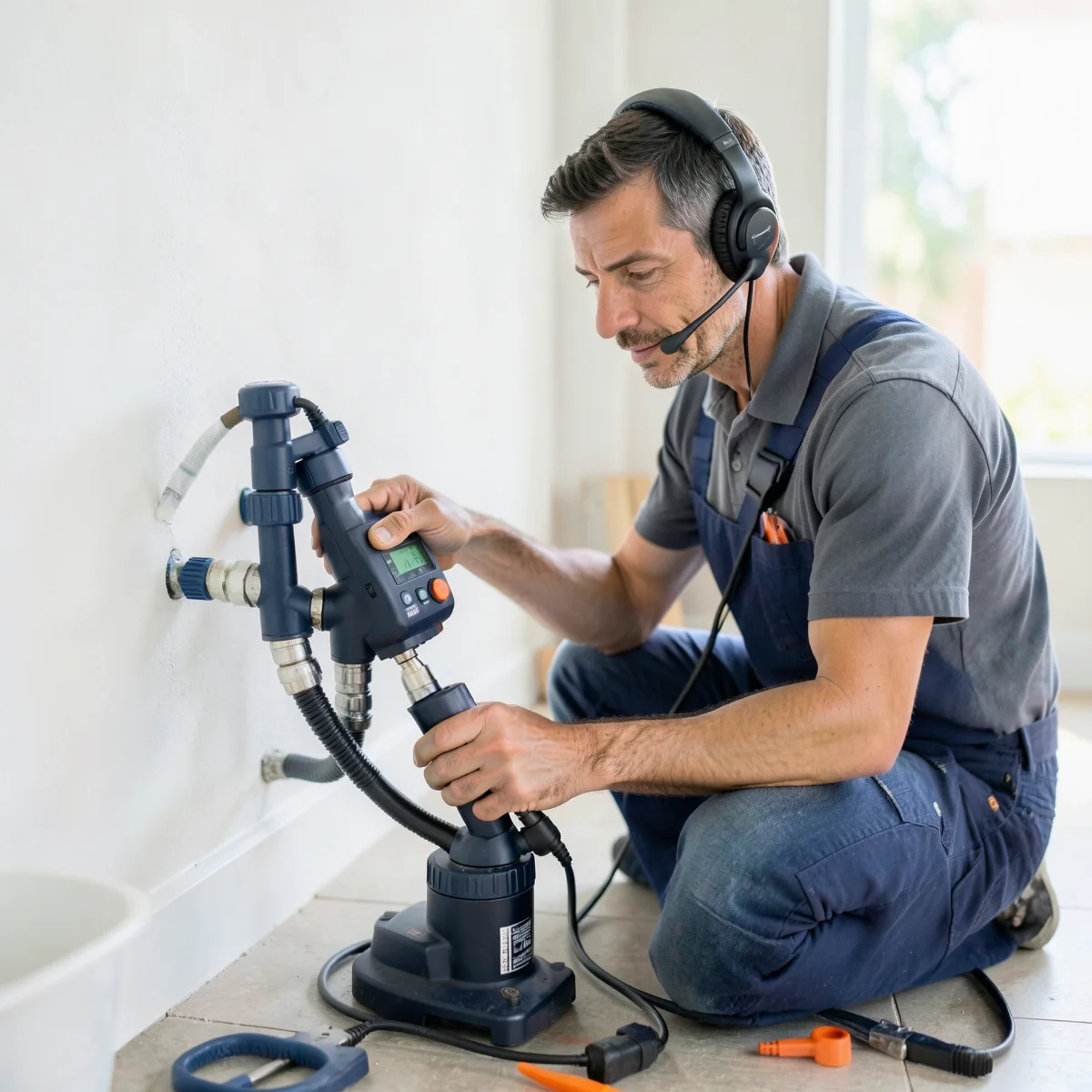
We find the leak before we open anything up. Electronic listening gear and thermal cameras tell us where the water is, so we're not knocking holes in drywall hoping to get lucky. You get a straight answer, then a quote to fix it.
Why a Hidden Leak Is Worse Than the One You Can See
A drip under the sink is annoying, but at least you can see it and stop it. The dangerous leaks are the ones buried in a wall, under the slab, or out in the yard line where you'd never look. By the time most folks notice, the water has already been running for weeks, and the damage is done quietly behind the scenes.
On a Colton slab home, a pinhole leak in a copper line under the foundation can wick moisture up through the concrete and into your flooring before you ever see a puddle. Our soil swings between swollen-wet and bone-dry through the seasons, and that constant push and pull works fittings loose and opens hairline cracks. Older homes around South Colton and Cooley Ranch with galvanized or aging copper are especially prone to it. A small quake can do the same thing in a single afternoon.
Here's how we handle it. We pressure-test the system to confirm there really is a leak and roughly how big it is. Then we use acoustic sensors to listen for the hiss of water escaping under pressure, and a thermal camera to spot the temperature change a leak leaves behind. That combination narrows it down to a small area, so when we do open something up, it's one clean spot, not a wall full of guesswork. Find it right, fix it once.
Signs You've Got a Leak You Can't See
- Your water bill climbed with no change in how you use water
- A warm or damp spot on the floor, often near the slab
- The sound of running water when every fixture is off
- A musty smell, peeling paint, or a stain spreading on drywall or ceiling
- One patch of the yard stays green and soggy while the rest dries out
- Water pressure drops across the whole house for no clear reason