You ran out of hot water again. Last one in the shower got the cold rinse, and that 40-gallon tank in the garage has been ticking and groaning for years. If you live in Colton, there's a good chance that tank is also full of scale from our hard water, working twice as hard to heat half as much.
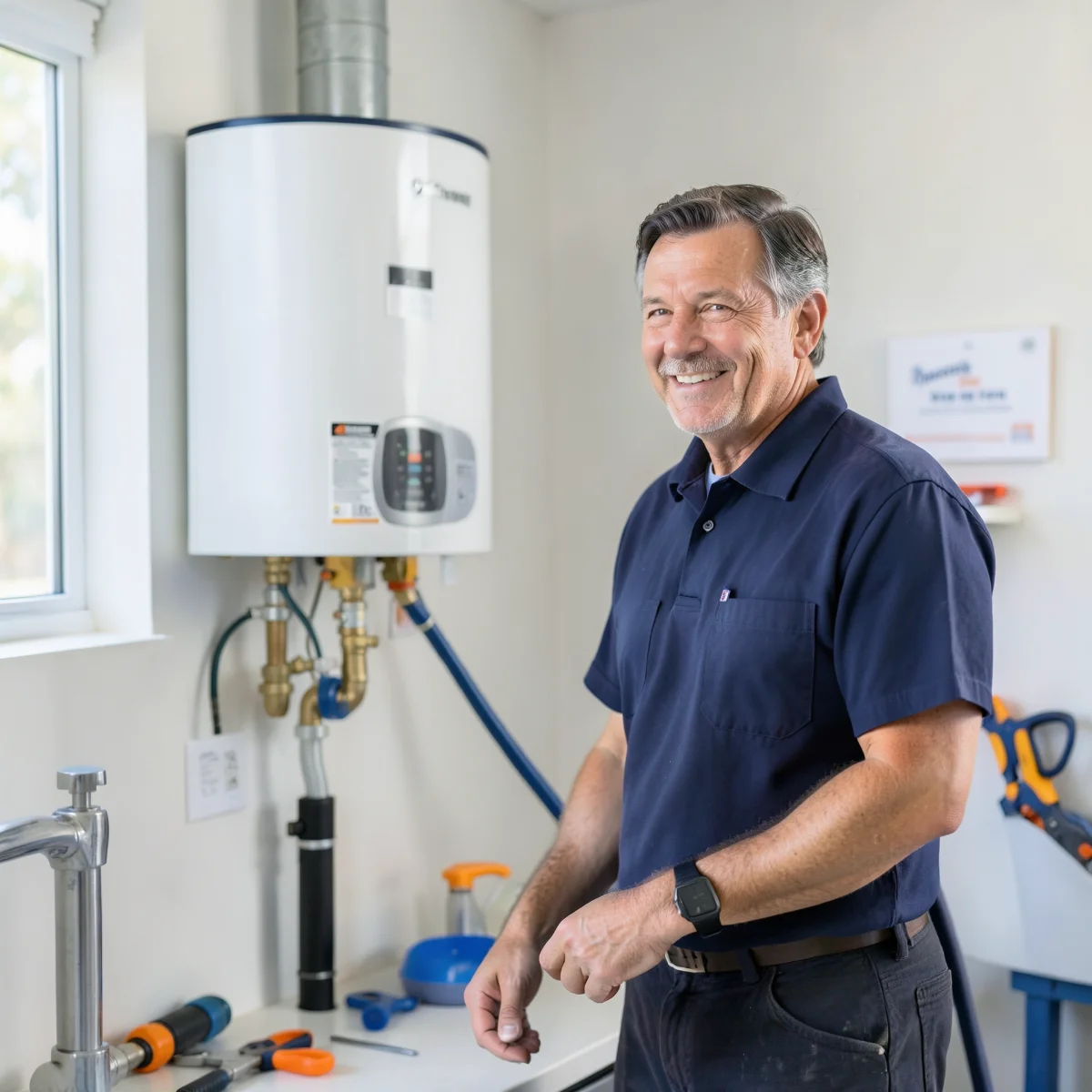
A tankless water heater fixes both problems. It heats water the moment you turn the tap, so you get hot water as long as you need it, and it hangs on the wall instead of eating up a corner of the garage or a closet.
We size and install tankless units across Colton, from the older bungalows in South Colton to newer builds out toward Reche Canyon. The key word is sized. Pick the wrong unit for our well water and your incoming temperatures, and you'll be disappointed. We'll get it right the first time.
Why your old tank quit on you
A standard tank keeps 40 or 50 gallons hot around the clock, whether you're home or not. Every Colton home pushing hard water through that tank builds a layer of mineral scale on the bottom. That scale acts like a blanket between the burner and the water, so the heater runs longer, costs more, and wears out faster. By year ten or twelve, most tanks are rusting from the inside and one good leak away from flooding the garage.
A tankless heater has no tank to corrode and no standing water to scale up the same way. Cold water runs through a heat exchanger, fires up only when you call for it, and delivers hot water until you shut the faucet. No reserve to run dry, no 50 gallons waiting to dump on your floor.
Here's the honest part. Hard water is still hard water, and a tankless unit needs the heat exchanger flushed once a year or so to stay efficient. We tell every Colton customer that up front, and we'll show you how, or put you on a simple maintenance schedule. A unit that's sized right and flushed yearly can outlast two or three of the tanks it replaced.
Signs it's time to go tankless
- You run out of hot water before everyone's had a shower
- Your tank is over 10 years old and rumbling or popping
- Rust-colored water shows up when you first turn on the hot tap
- You want the garage or closet space the tank is hogging
- Energy bills keep climbing while the water gets less hot
- You found water or rust streaks around the base of the tank