You felt it with your bare feet. A warm patch on the kitchen tile that has no business being warm. Or the water bill jumped and nobody left a hose running. That nagging feeling in the back of your head is usually right: water is moving somewhere under your slab where it shouldn't be.
Slab leaks are sneaky here in Colton. We sit on clay and adobe soil that swells when it's wet and shrinks when it's dry, and that constant push-pull works copper and galvanized lines loose right where they run through the concrete. Add hard Inland Empire water scaling up the inside of those pipes, and a pinhole leak under your floor is just a matter of time in a lot of these homes.
Here's the good news. We find the leak first, then open the floor in one spot. No jackhammering the whole slab on a guess and hoping we got lucky.
Why a Slab Leak Won't Just Go Away
A slab leak is a break in a water line running under or through your concrete foundation. Pressurized water doesn't sit still. It follows the path of least resistance, wicks into the soil, and softens the ground that's holding your house up. Left alone, that shows up as cracked tile, doors that suddenly stick, a hairline crack creeping up the drywall, and a foundation that starts to settle unevenly. The repair gets bigger and more expensive the longer it runs.
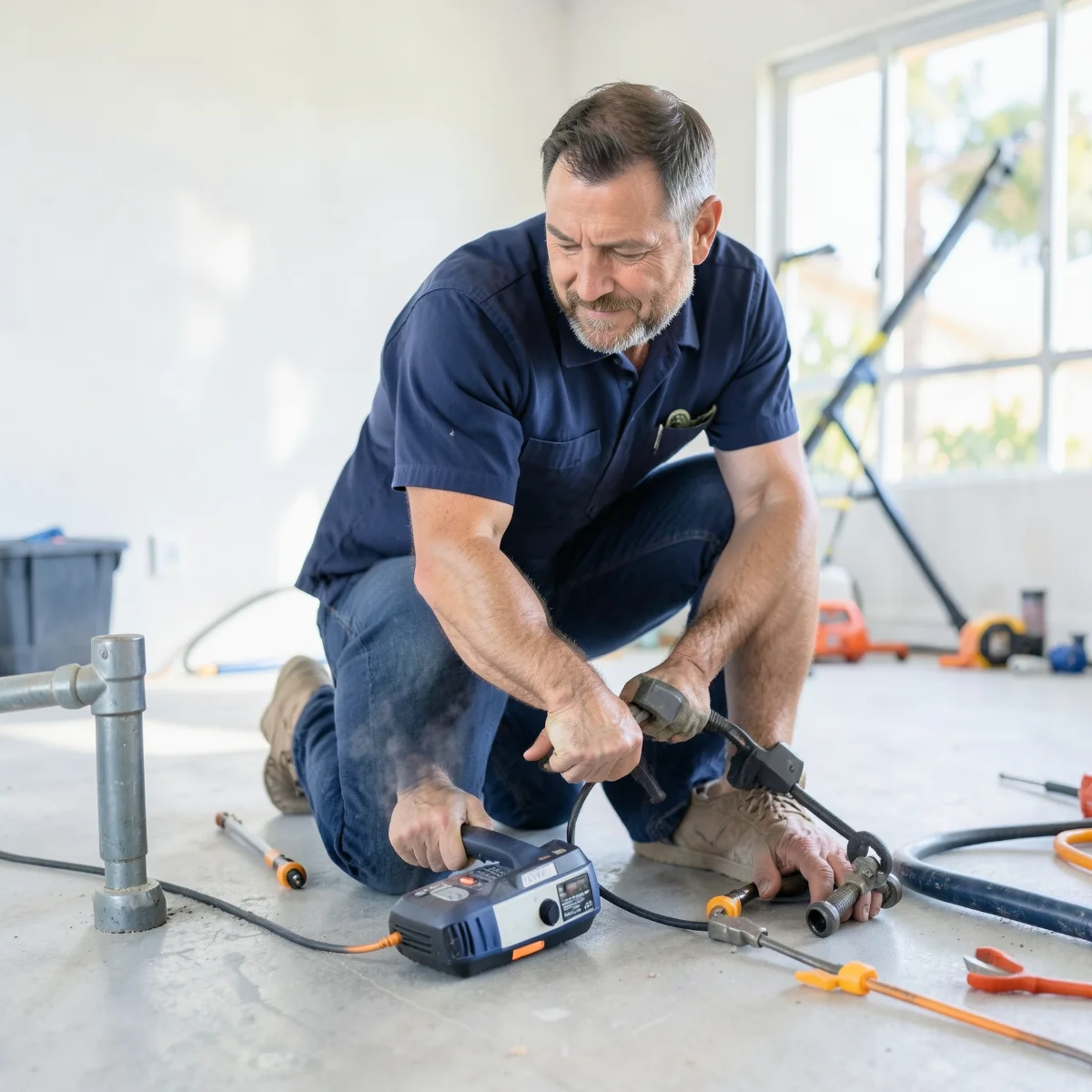
We start by pinpointing it. Using electronic acoustic listening gear and pressure testing, we trace the leak to within a small area instead of demolishing the floor across the room. Once we know exactly where it is, we talk you through your real options before we touch the concrete.
Sometimes the right call is a spot repair: open the slab over the break, fix that section, patch it back. Other times, if the line is old galvanized or the pipe has multiple weak spots, it makes more sense to reroute fresh PEX or copper above the slab or through the wall and abandon the bad line entirely. We tell you which one actually fits your house and your budget. No upselling you into a repipe you don't need.
Signs You've Got a Slab Leak
- A warm or hot spot on the floor (that's usually a hot water line leaking)
- Your water bill climbed with no change in how you use water
- The sound of running water when every faucet is off
- Low water pressure throughout the house, or hot water that never quite gets hot
- Cracks in the floor tile, baseboards, or drywall that weren't there last year
- A damp, musty smell or mildew along the floor in one room