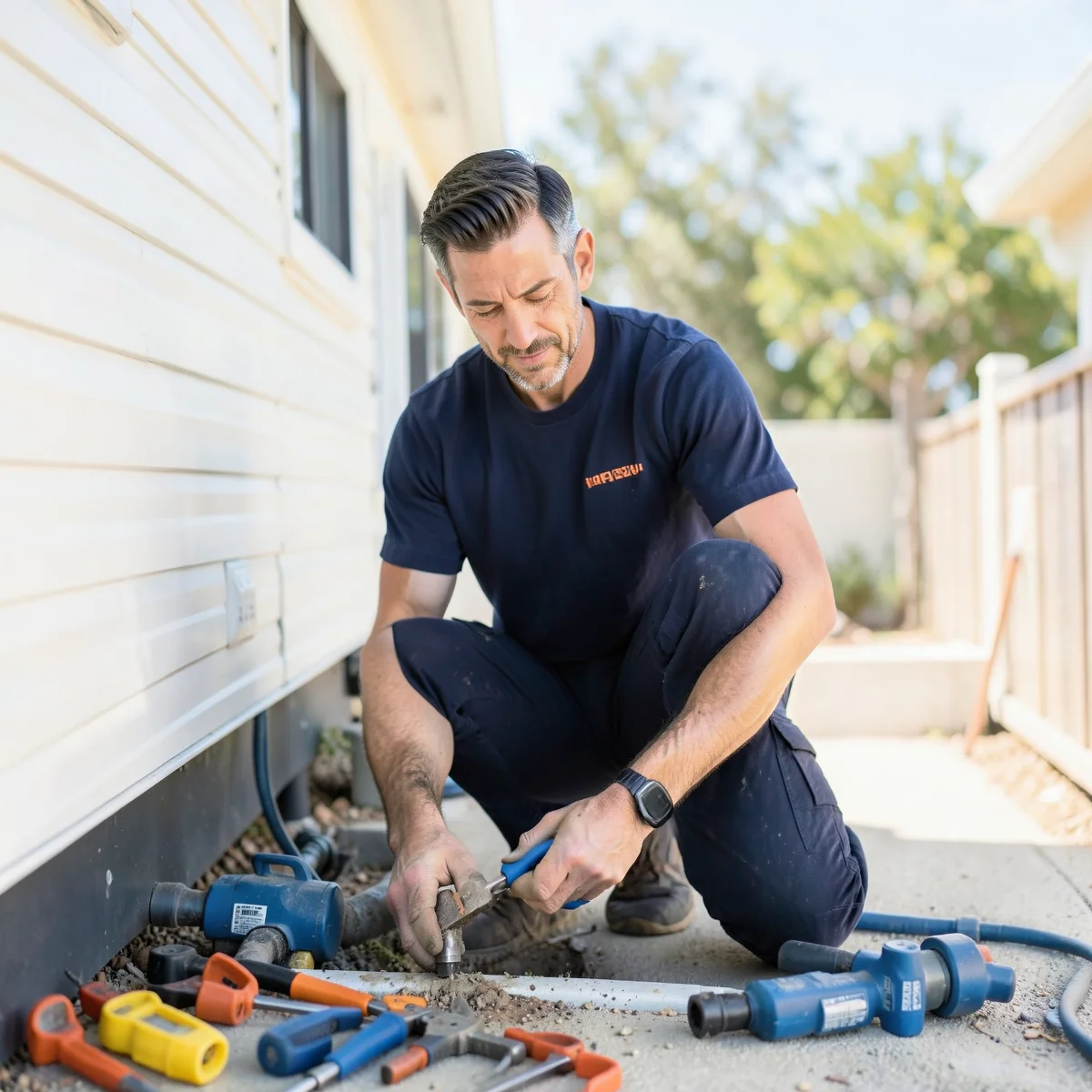
Mobile home plumbing is its own animal. The lines run under the floor in a crawl space barely tall enough to slide into, the pipes are smaller and lighter than what you find in a stick-built house, and a lot of the fittings are made of materials a regular plumber rarely touches. If you own a manufactured home in Colton, you already know a shop that mostly works on slabs and copper isn't always the right call.
We work under manufactured homes all over town, from the parks off Valley Boulevard to the ones tucked back toward Reche Canyon. We know where the lines hide, how they're hung, and why they fail. That means less time poking around and more time fixing the thing that woke you up at 2 a.m.
Whether it's a slow drip you've been ignoring or a hard line break under the bedroom, we'll give you a straight answer on what's wrong and what it costs to put right.
Why Mobile Home Plumbing Breaks Differently
Manufactured homes sit on piers, not a poured slab. That sounds like a small thing until the Colton clay gets involved. Our soil swells when it's wet and shrinks when it's dry, and that movement works the piers up and down all year. Every time the home shifts, the supply and drain lines flex at the joints. Do that for a decade or two and fittings loosen, slip joints pull apart, and the flexible water lines crack right where they bend.
Then there's the material problem. A lot of older mobile homes were plumbed with polybutylene supply line and lightweight ABS or thin PVC drains. Polybutylene gets brittle and splits, especially with the scale our hard Inland Empire water leaves behind. The under-floor belly wrap that's supposed to protect everything also hides the leak, so water runs along the insulation and rots the subfloor before you ever see a drop inside.
We fix it at the source. That usually means pulling the bad section, swapping brittle poly or cracked line for PEX, and re-supporting the run so it isn't hanging off a single strap taking all the stress. Where the belly wrap is soaked, we open it, dry it out, repair the line, and seal it back up so the next rain doesn't undo the work. You get a fix built for how a manufactured home actually moves, not a patch that fails by next season.
Signs Your Mobile Home Has a Plumbing Problem
- A soft or spongy spot in the floor, often near a tub, toilet, or kitchen sink
- Water dripping from the belly wrap underneath the home or pooling on the ground below it
- Water pressure that's dropped off across the whole home, or that sputters at the tap
- A musty smell or visible mold along baseboards and around fixtures
- Your water bill creeping up with no change in how much you're using
- Pipes that knock, rattle, or bang when you shut off a faucet