You opened the cabinet under the kitchen sink to grab the dish soap and felt it. A damp sponge of a shelf. Maybe a slow drip you can hear at night. Maybe the water in the basin just sits there now, swirling like it's thinking about it.
Sinks take more abuse than any fixture in a Colton house. Run the disposal, rinse the dishes, brush your teeth, wash your hands a hundred times a day. The drain clogs, the P-trap loosens, a supply line weeps where it threads into the angle stop. None of it fixes itself.
We're local plumbers. We come out, find the actual leak instead of guessing, and give you a straight answer on what it costs before any wrench turns.
Why your sink is acting up
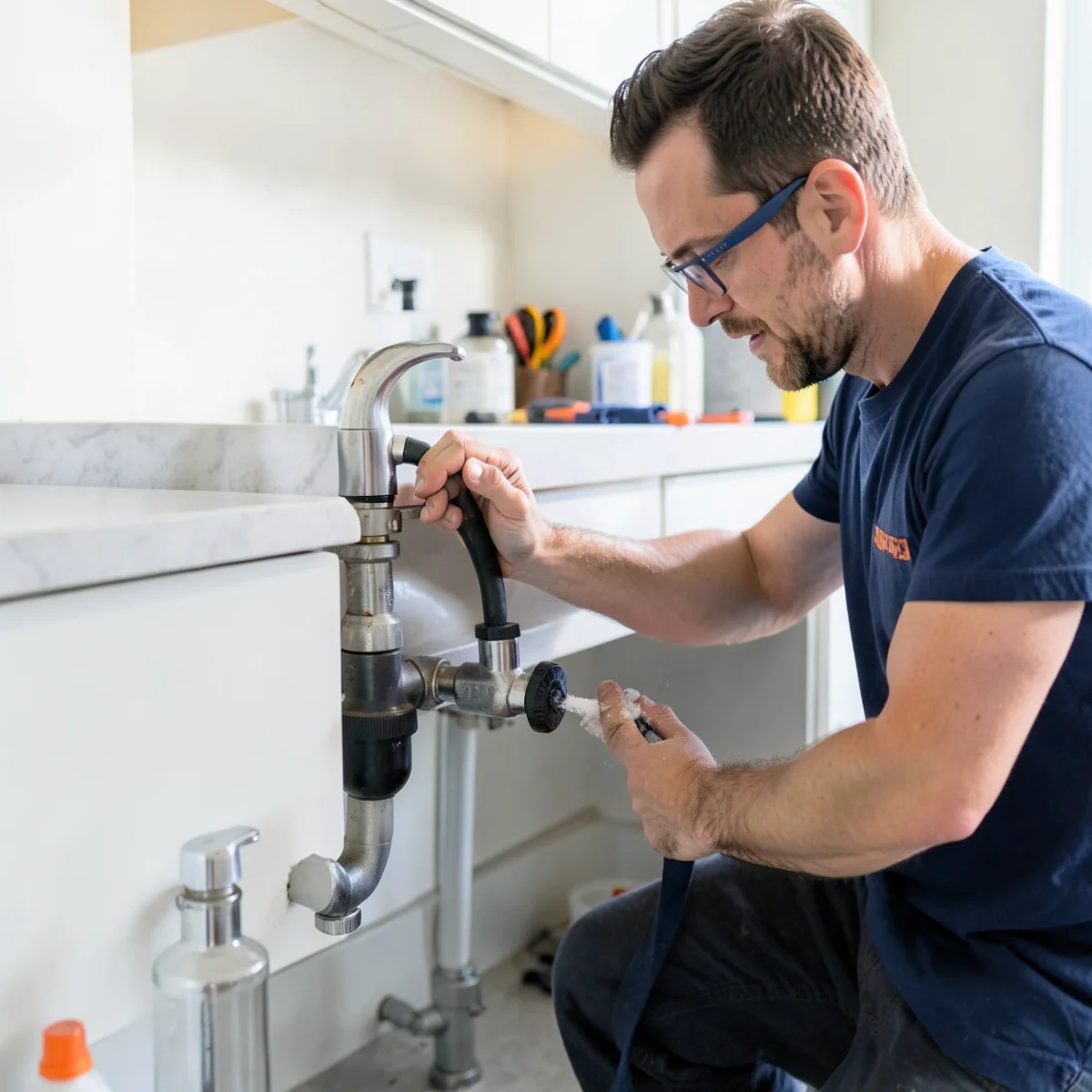
Most sink trouble is one of two things. Either the drain side is slow, or the supply side is leaking. The drain side clogs because grease, coffee grounds, soap scum, and hair build a wall inside the P-trap and the arm behind it. Our hard Inland Empire water makes it worse, leaving scale that grabs everything passing through. The supply side leaks at the connections, where the flex line meets the angle stop or the faucet tailpiece, usually from a worn washer, a corroded nut, or a fitting that was never snugged right.
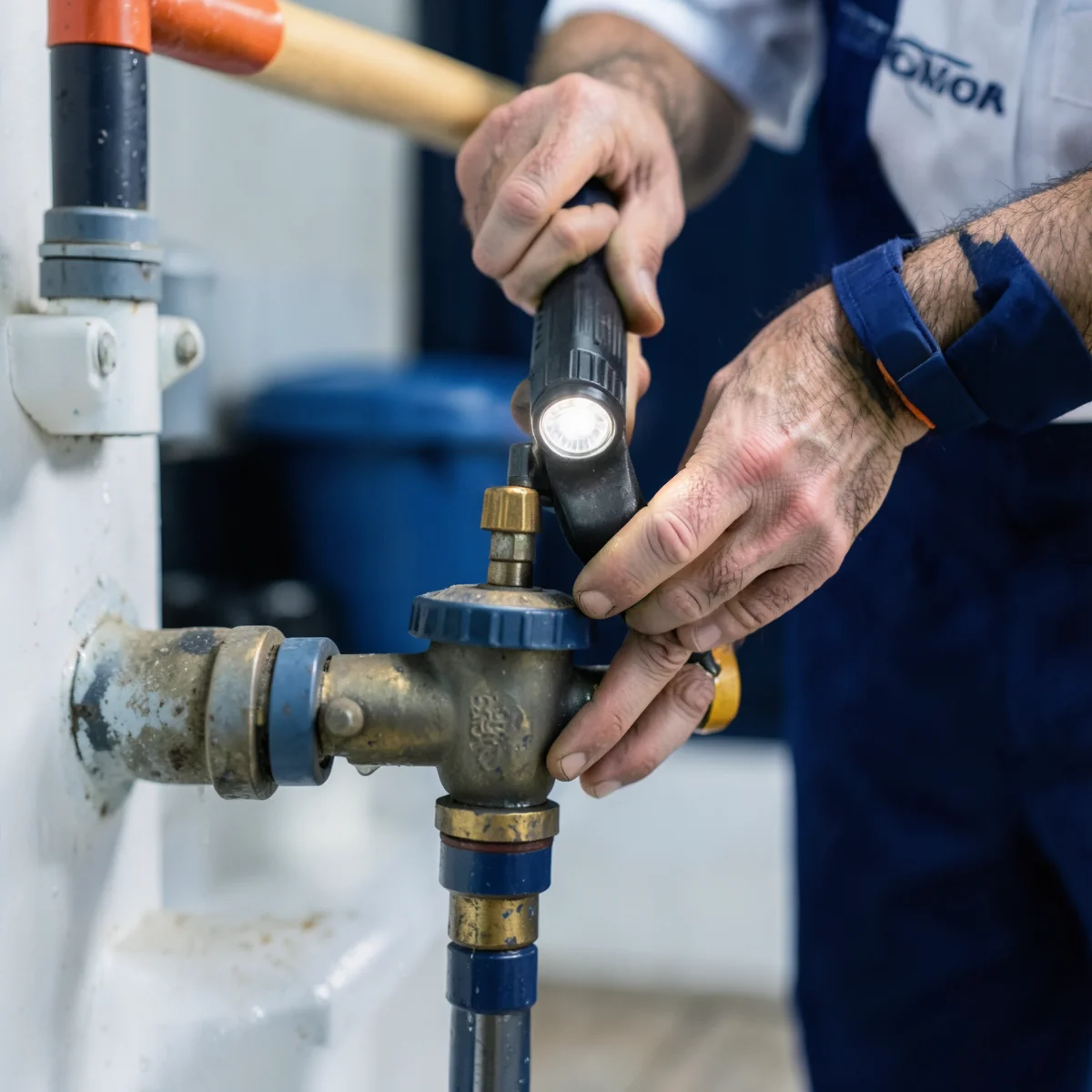
We don't just snake it and run. We pull the trap, see what's actually in there, and check whether the slope of the drain arm is part of the problem. On the supply side we test every joint under pressure, swap the bad flex lines, and replace a seeping angle stop instead of taping over it. In a lot of older South Colton and Cooley Ranch homes the shut-off valves are original and frozen solid, so we'll tell you if that valve needs to go too.
When the fix is a fifteen-dollar part, we say so. When the faucet body itself is cracked or the basket strainer is shot, we tell you that straight, with the cost of repair next to the cost of replacement so you decide.
Signs your sink needs a look
- Water pools in the basin and drains slow even after a plunge
- A damp cabinet floor, swollen wood, or a musty smell under the sink
- Gurgling from the drain or a sewer odor that won't quit
- A steady drip from the faucet base or the handle when it's off
- Green or white crust building on the supply nuts and angle stops
- Low flow at this one faucet while the rest of the house runs fine