You know the rain in Colton doesn't show up gentle. We go months bone-dry, then a storm rolls in off the I-10 and dumps an inch in an hour. If your yard drains and area drains can't take it, that water has to go somewhere. Usually it goes toward your slab, your garage, or the low spot by the back door.
Most folks never think about the drains in the yard until they're standing in a pond watching it rise. By then the leaves, silt, and clay-fine mud have already packed the line solid.
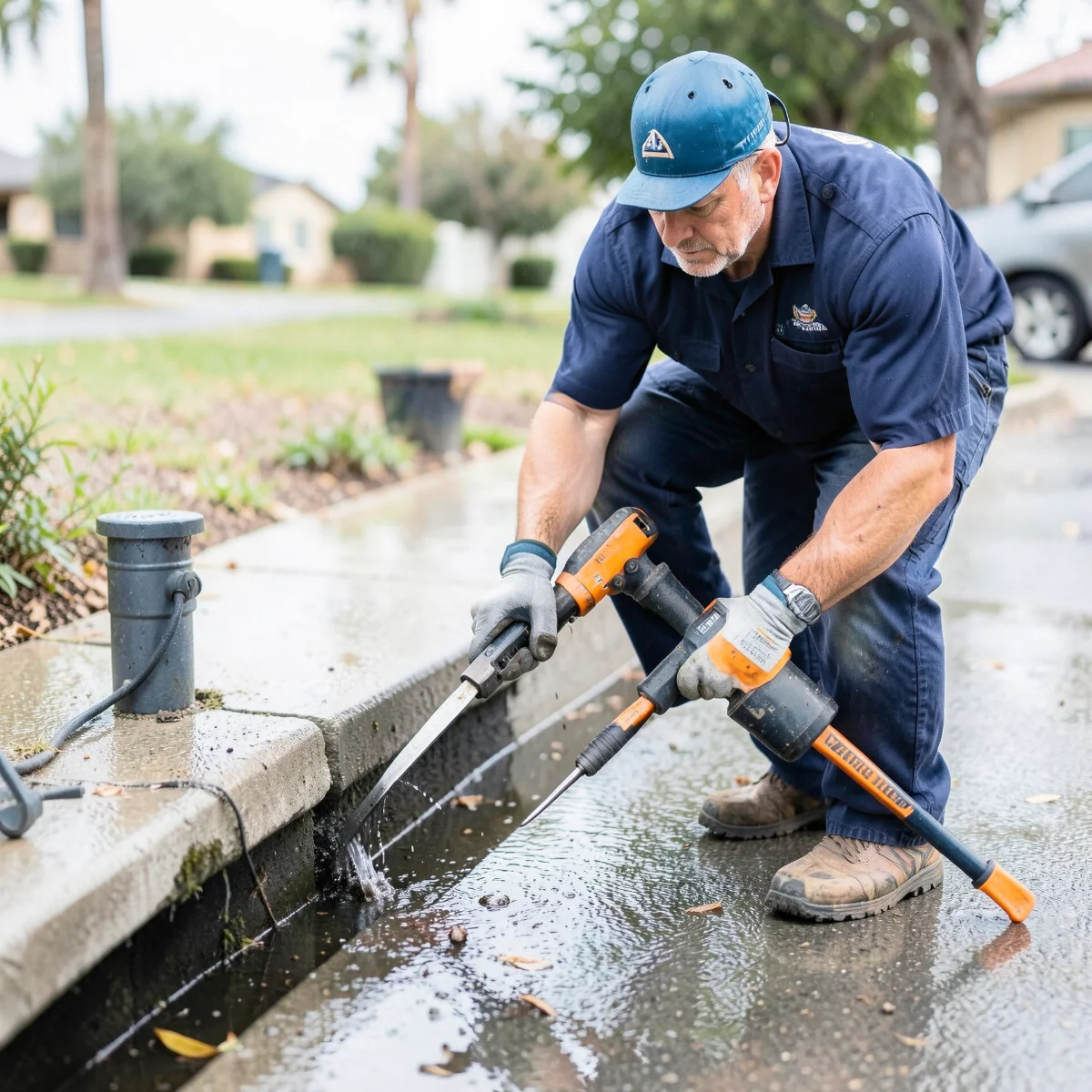
We clean storm drains, yard drains, and area drains across Colton so the next downpour runs off the way it's supposed to instead of pooling against your foundation.
Why Yard and Area Drains Stop Draining in Colton
Storm drains fail slow, then all at once. Over a dry stretch, leaves and grass clippings settle into the grate. Then our sandy loam and clay wash down with the first rain and turn that loose debris into a plug that won't budge. Add the catch-basin grates that sit in lawns and planters around Cooley Ranch and South Colton, and you've got a year's worth of junk waiting in the pipe.
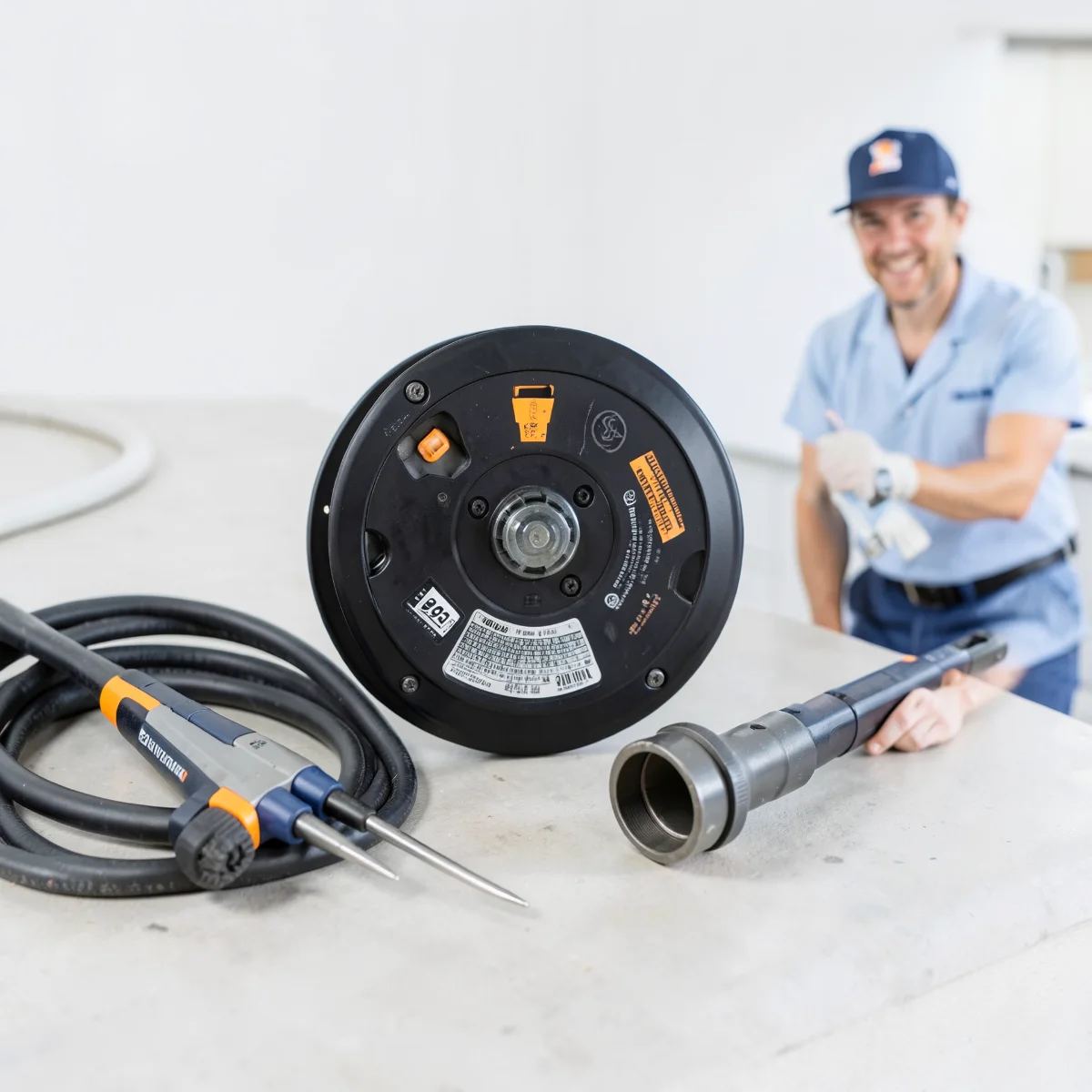
The fix isn't a bottle of anything from the hardware store. Those drains are too long and the clog is too dense. We run a powered drain machine or, when the line's really packed with silt and root, a hydro-jetter that scours the pipe wall back to bare PVC. Jetting is the one that actually clears the mud out instead of just poking a hole through it.
When the water still backs up after a good cleaning, we put a camera down the line. Roots from an old parkway tree, a crushed section, or a joint that shifted in a quake — we find it on screen so you're not paying to guess. Then you get a straight answer on whether it's a clean, a spot repair, or a relining.
Signs Your Storm Drain Needs Attention
- Water pools in the yard or against the foundation hours after the rain stops
- The drain grate gurgles, bubbles, or drains slow when you run a hose into it
- Mud, silt, or leaf muck sits visible right at the grate and never clears
- Patio, driveway, or garage floods at the low spot every heavy storm
- You hear water moving but nothing comes out the discharge end downhill
- Mosquitoes and standing water linger by the downspout long after a storm