You walked into the kitchen and caught that rotten-egg smell. Or the stove clicked but wouldn't light right. Either way, your gut said something's wrong with the gas. Trust it.
Gas line trouble is one of the few plumbing problems where the clock actually matters. A slow leak under your Colton home can sit quiet for weeks, then build into something dangerous. The smell is the warning. The fix is real gas line repair done to code.
We're local plumbers here in Colton, and we handle gas lines the right way — find the leak, pressure-test the line, and repair it so it passes inspection and stays safe. If you smell gas right now, stop reading, get everyone outside, and call (207) 419-2600.
Why Gas Lines Fail Under Colton Homes
Gas lines don't last forever, and the ground out here doesn't help. Colton sits on clay and adobe soil that swells when it's wet and pulls back hard during the dry months. That constant shift tugs on buried gas lines, loosens threaded fittings, and stresses the joints where the pipe runs from the meter to the house. Add in the older black-steel lines under homes built in the 1950s and 60s, and corrosion does the rest from the inside out.
Seismic activity adds another wrinkle. We're in earthquake country, and even a small shaker can twist a fitting loose or crack a joint you'd never see. A line that was tight last year can develop a slow seep this year without anyone touching it.
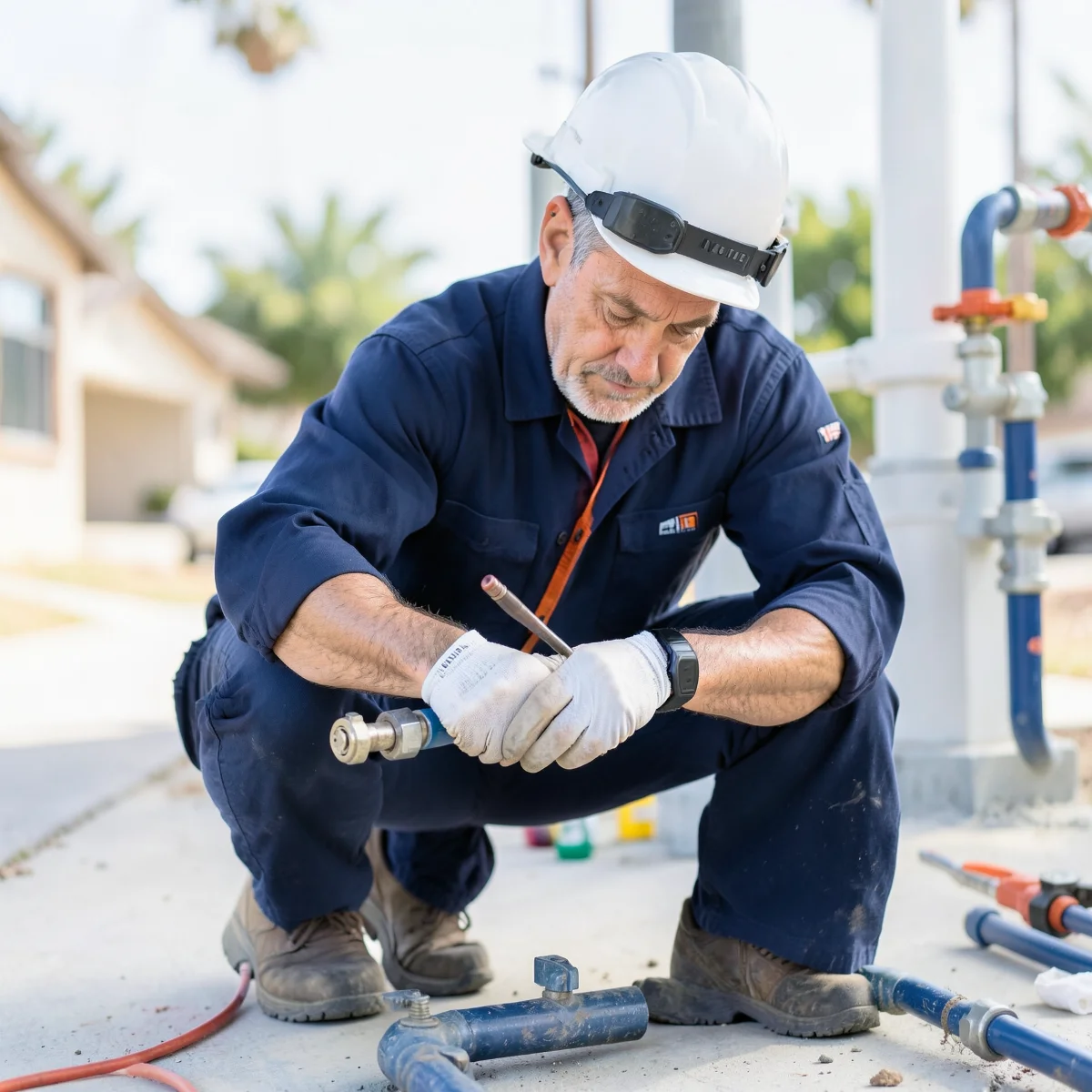
Here's how we handle it. We use a combustible-gas detector to pin down where the leak is, then isolate that section and put the line under a pressure test so the gauge tells the truth — no guessing. If it's a bad fitting, we repair the joint. If the run is corroded or undersized, we replace that section with new pipe sized correctly for your appliances. Then we test again and don't call it done until it holds and passes inspection.
Signs You Have a Gas Leak or a Failing Line
- A rotten-egg or sulfur smell near the stove, water heater, furnace, or outside by the meter
- A hissing or faint whistling sound near a gas appliance or along the line
- Your gas bill jumped with no change in how much you use
- A pilot light that keeps blowing out, or burner flames that look orange instead of blue
- Dead or yellowing grass in a straight line over where the gas line runs through the yard
- Feeling lightheaded, dizzy, or nauseous indoors that clears up when you step outside