You run a kitchen in Colton. Maybe it's a taqueria off Valley Boulevard, a diner near Downtown, or the prep line at a place out by Colton Crossing. Either way, every shift sends fats, oils, and grease down the drain, and your grease trap is the only thing standing between that mess and a sewer backup at the worst possible moment.
Skip the cleanings and that trap fills with a hardened cap of grease. Drains slow. The smell creeps into the dining room. Then a health inspector walks in, or the line backs up on a Friday night with a full house. Neither one is cheap to fix.
We pump, clean, and document grease traps for restaurants and commercial kitchens across Colton on a schedule you can count on. Local plumbers, upfront pricing, and a paper trail that keeps you compliant. Call to set up service and stop worrying about what's building up under the sink.
Grease Doesn't Disappear — It Builds Until It Backs Up
A grease trap works by slowing wastewater down long enough for grease to float to the top and solids to sink to the bottom. The clear water in the middle moves on to the sewer. But the trap only holds so much. Once that grease layer gets thick enough, it stops separating and starts flowing straight into your sewer line — or backing up into your kitchen floor drains.
Out here it gets worse faster than most owners expect. Colton's hard water leaves scale inside the trap and the lines feeding it, narrowing the path grease has to move through. Plenty of older buildings in South Colton and along Mount Vernon Avenue still run on clay sewer lines, and grease loves to grab onto root intrusion and offset joints, turning a slow drain into a full clog. A trap that's overdue is the first domino.
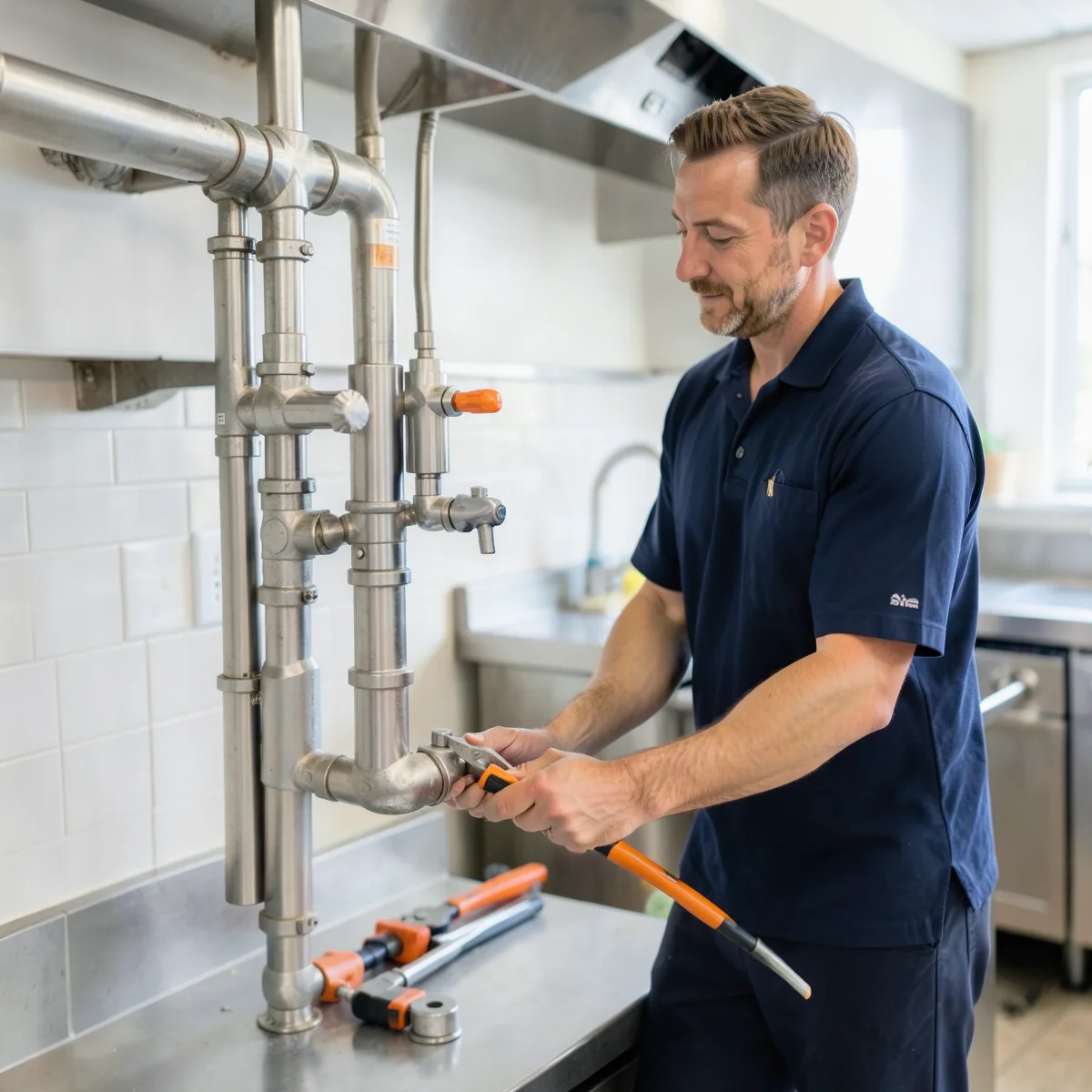
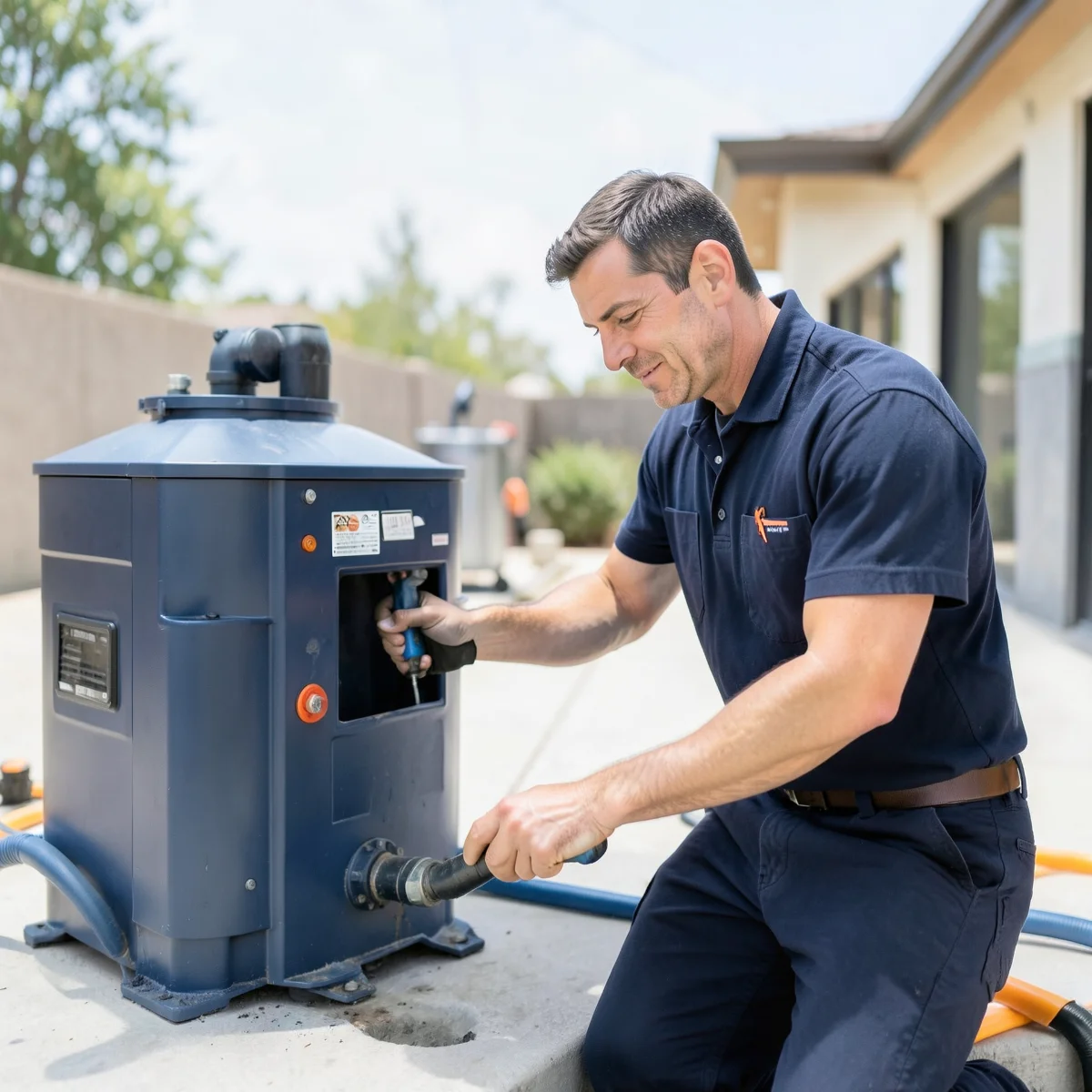
Here's how we fix it. We fully pump the trap — grease cap, liquid, and bottom sludge, not just a skim off the top. We scrape and clean the walls, baffles, and inlet and outlet tees so the trap actually separates again. Then we check the lines downstream, log the gallons hauled, and hand you the manifest your city and health department want to see. Done right, on schedule, and you're not the kitchen that floods at dinner rush.
Signs Your Grease Trap Needs Service Now
- Sinks and floor drains in the kitchen draining slower than they used to
- A sour, rotten smell drifting up from drains or out of the dish area
- Grease or dark water bubbling up around floor drains during busy shifts
- The grease layer is more than a quarter of the trap's total depth (the 25% rule)
- It's been longer than 90 days since your last cleaning
- A health inspection is coming up and you can't find your last service manifest