You found water under the slab. Maybe it was a warm spot on the floor, a water bill that doubled for no reason, or a plumber telling you there's a leak buried in the concrete. Now you're staring down the idea of jackhammering your living room floor. Take a breath. There's often a better way.
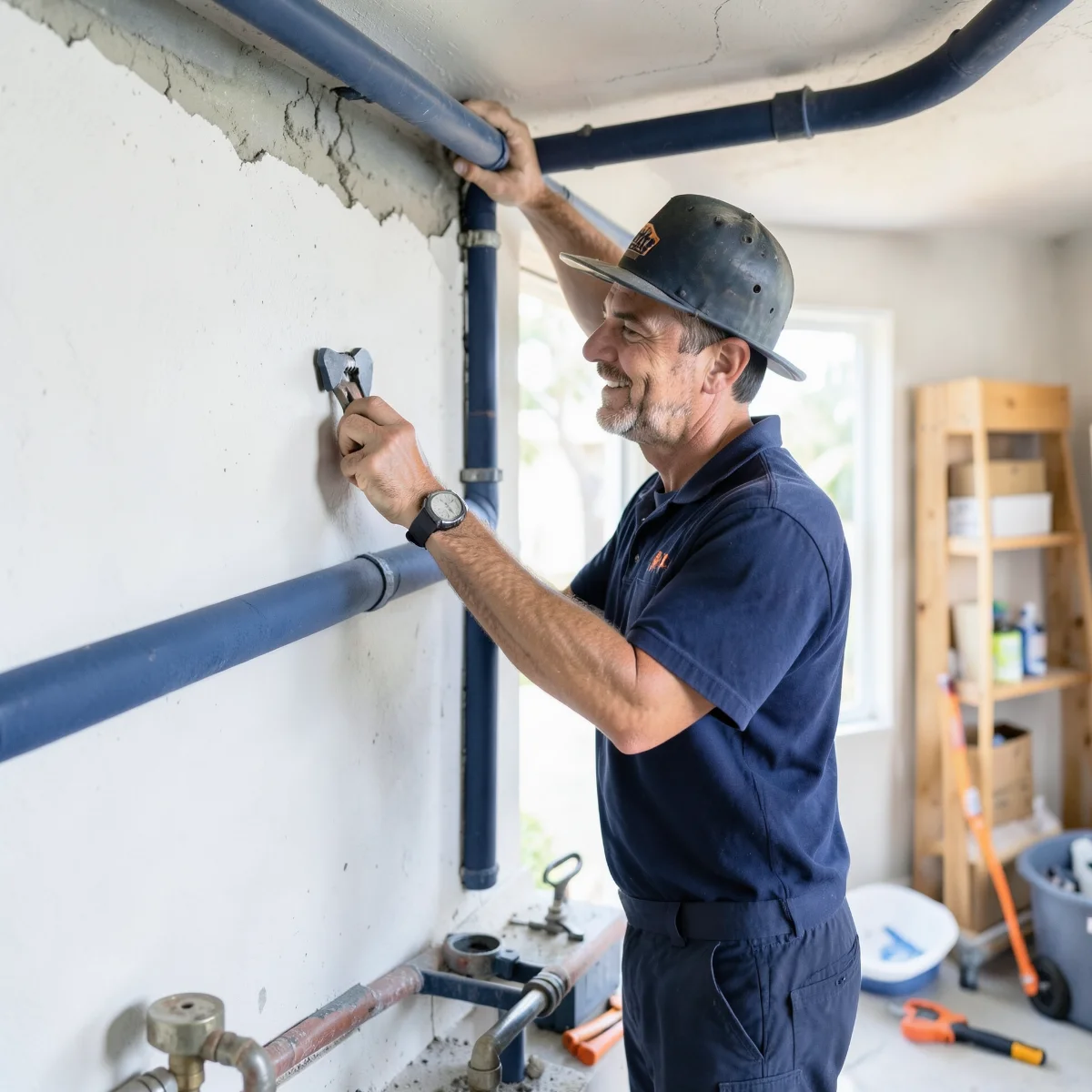
Pipe rerouting bypasses the bad line instead of digging it out. We abandon the failed section under the slab and run fresh pipe through the walls, ceiling, or attic to get water where it needs to go. One leak, fixed once, without tearing your foundation apart.
Here in Colton, slab leaks are common. The clay and adobe soil under a lot of these homes swells when it's wet and pulls back when it's dry, and that constant shift grinds on the copper running through your foundation. A rerouted line steps out of harm's way for good.
Why That Slab Line Failed in the First Place
Most slab leaks around here start the same way. A copper line was poured into the concrete decades ago, and the expansive soil under your foundation never stops moving. Wet winter, dry summer, the ground heaves and settles, and the pipe rubs against rebar or rock until it wears a pinhole through the wall. Add hard Inland Empire water scaling up the inside, and a thinned-out line doesn't stand much of a chance.
The temptation is to break open the slab, patch the one spot, and pour it back. Sometimes that's the right call. But if the rest of that line is the same age and the same copper, you're often back under the jackhammer in a year or two for the next pinhole a few feet over. That's two repairs, two messes, two bills.
Rerouting solves the whole run at once. We cap off the dead line in the concrete, leave it sealed in place, and route a brand-new section overhead or through the walls. No more pipe sitting in soil that won't hold still. The leak is gone, and the path it took with it.
Signs Rerouting Might Be Your Best Move
- A leak detection pinpointed a break in copper buried under your slab
- You've already had one slab spot-repair and a new leak popped up nearby
- The hot water line is the culprit — those fail first and fastest in clay soil
- Your water heater runs constantly or the floor has a warm patch that won't quit
- City of Colton water pressure is fine at the street but weak inside the house
- You'd rather not jackhammer a finished floor, tile, or hardwood you just put in