You walk into the laundry room and your sock gets wet. Then you see it — a slow drip behind the washer, or worse, a puddle creeping toward the hallway. That little hookup behind your machine is one of the most ignored spots in a Colton home, and it fails more often than people think.
Most washer hoses are rubber, and rubber doesn't last forever. Add the hard water we get all over the Inland Empire and those connections get brittle and crusty from the inside out. A washing machine line is under house pressure 24 hours a day, even when the machine is off.
We handle the whole hookup — the shutoff valves, the supply hoses, and the standpipe drain. Same-day appointments when we can, and a straight answer on whether you need a quick swap or the full upgrade.
Why washer hookups fail — and how we fix them
Here's the part homeowners miss. The two hoses feeding your washer hold back full water pressure all day long. Old rubber hoses bulge, crack at the crimped ends, and let go without warning. A burst supply line can push hundreds of gallons an hour onto your floor while you're at work or asleep. That's not a drip — that's a flooded room, ruined baseboards, and drywall that has to come out.
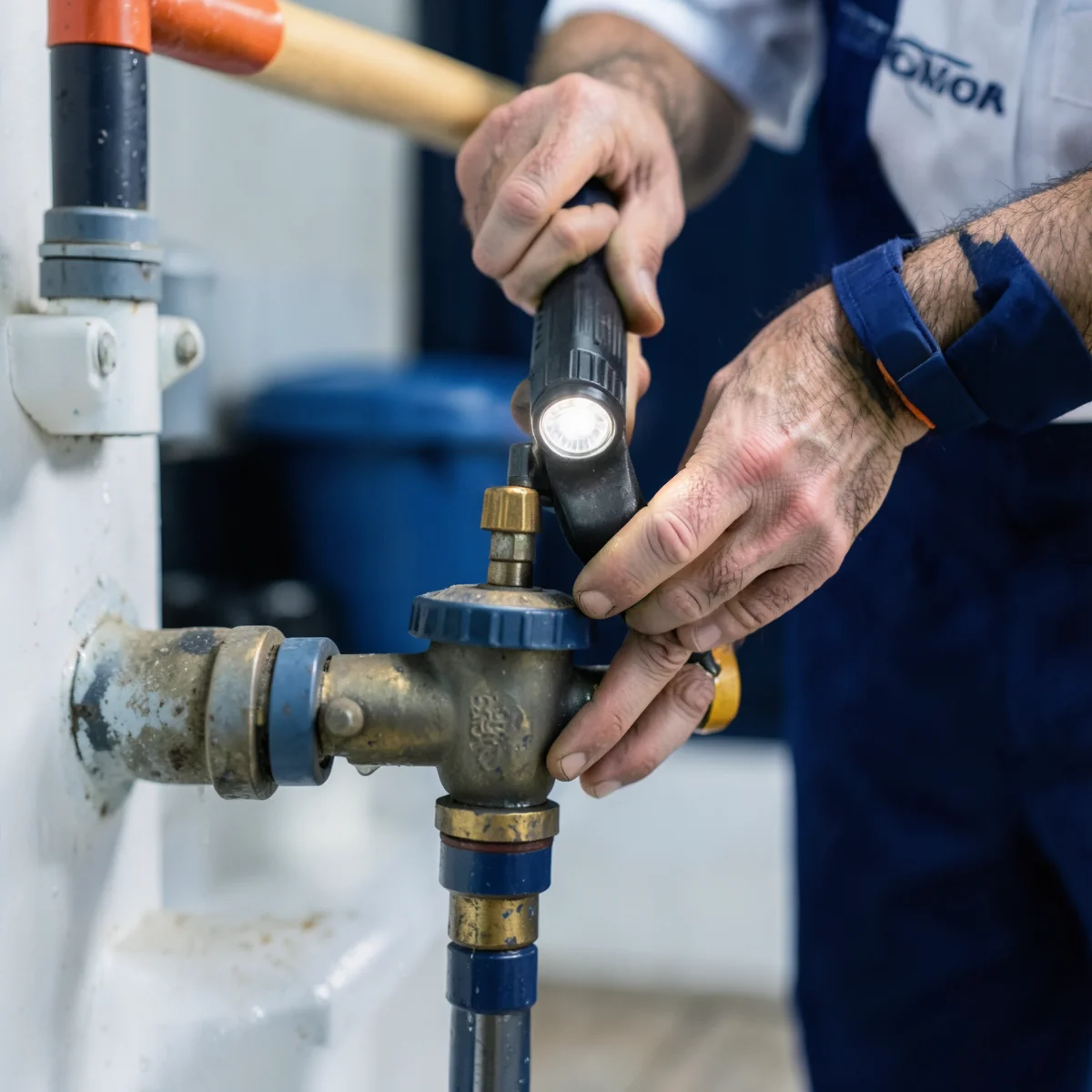
The shutoff valves are the other weak spot. Most older Colton laundry hookups have two separate gate valves, hot and cold, and after years of hard-water scale they seize up. When you finally need to shut the water off in a hurry, the handle won't budge or it snaps. Then the leak you were trying to stop just keeps going.
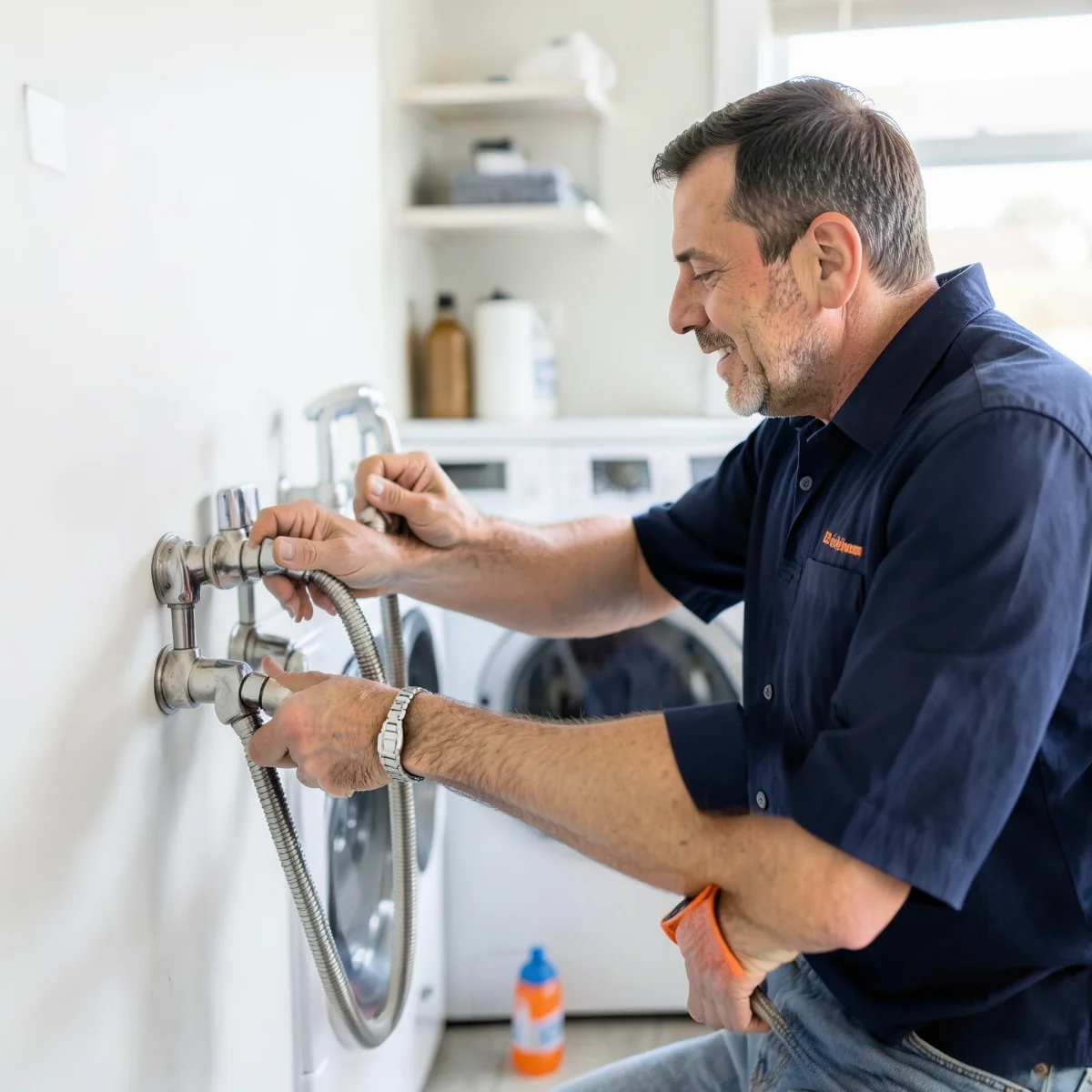
We fix it right. We swap your tired rubber hoses for stainless braided lines that resist bursting, replace seized gate valves with a single lever-action washer box so you can kill both hot and cold with one flip, and check that your standpipe drain is the right height and properly vented so it doesn't gurgle, back up, or siphon. If the connection is buried in an old wall box that's corroded, we replace the whole outlet box clean.
Signs your washer plumbing needs attention
- Bulging, cracked, or rust-stained rubber supply hoses behind the machine
- Shutoff valves that won't turn, drip at the handle, or are crusted with white scale
- Water pooling under or behind the washer after a cycle
- The drain standpipe gurgles, backs up, or overflows when the washer empties
- A musty, mildew smell in the laundry room from a slow hidden leak
- Hoses that are more than five years old or have never been replaced