Maybe the old toilet finally gave up. It rocks when you sit, the tank sweats all summer, and you've reset the wax ring twice this year. Or maybe you just want a new one that flushes right and stops wasting water. Either way, you're standing in the bathroom wondering whether to wrestle it yourself or call somebody who does this every week.
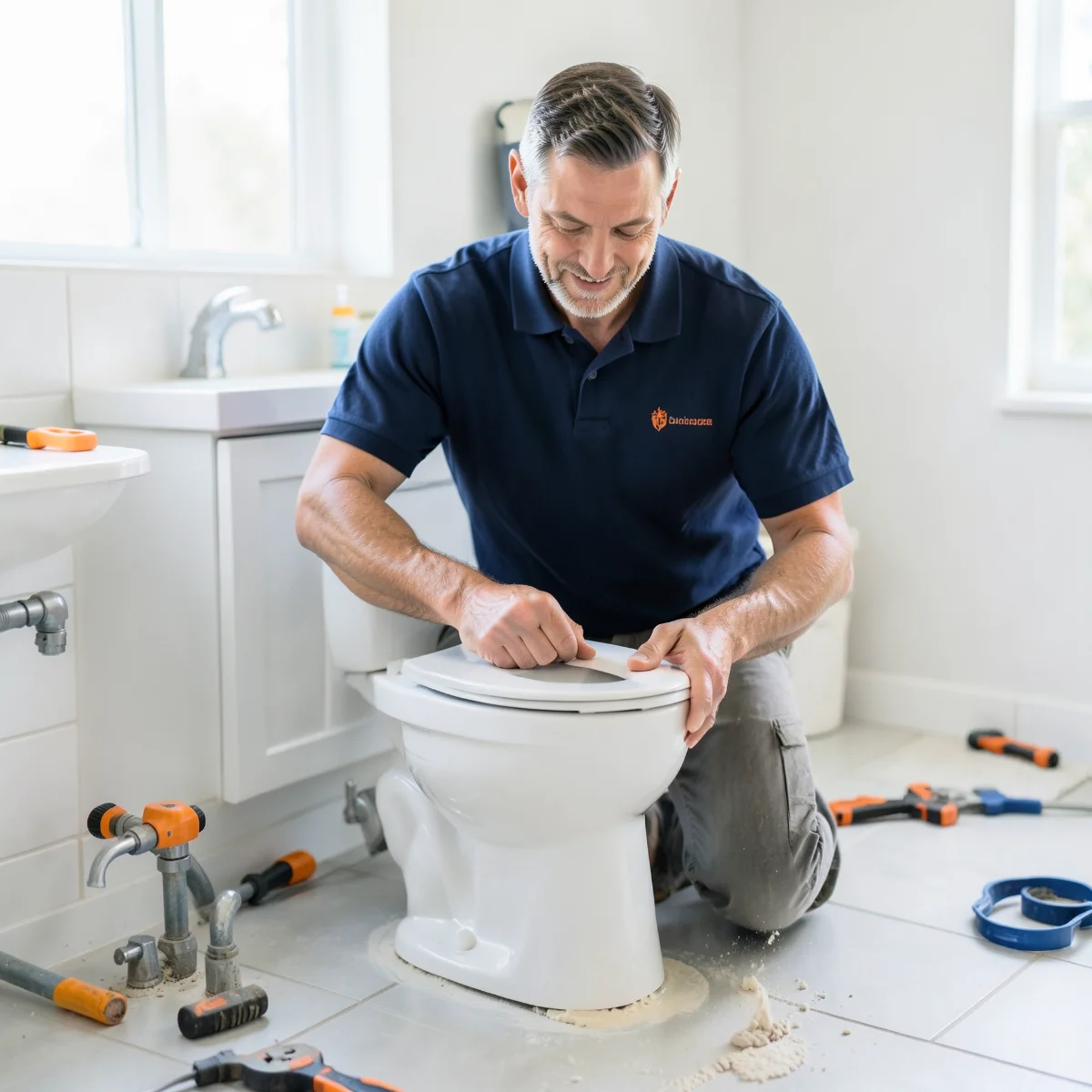
We set toilets all over Colton, from the older bungalows down in South Colton to the newer builds out by Cooley Ranch. New install or a swap-out, the job is the same on our end: get it level, get it sealed, and make sure it never leaks onto your floor.
It's a small fixture that causes big damage when it's set wrong. A bad seal soaks the subfloor for months before you ever see it. We'd rather do it once and do it right.
Why a toilet that's set wrong costs you later
A toilet looks simple. Two bolts, a wax ring, done. But a flange that sits below a new tile floor, a closet bolt that's corroded, or a tank bolted down crooked will haunt you. The leak usually starts at the base where the wax ring meets the flange, and it goes straight down into the subfloor. By the time the floor feels soft or you smell something, the plywood underneath is already rotting.
Colton's clay soil doesn't help. It swells in the rainy months and shrinks during the long dry stretch, and that movement works its way up through slab foundations. A toilet that was dead level the day it went in can sit slightly off a couple years later, which is why we shim and anchor properly instead of just snugging the bolts and hoping.
When we set yours, we check the flange height first, replace the bolts and the seal, dry-fit before we commit, and level it so it doesn't rock. Then we run it through a few flushes and watch the base while it fills. No movement, no seep, no mystery odor. If your flange is cracked or sitting too low, we tell you straight and fix that part before the new toilet ever goes on top of it.
Signs it's time to replace or reset your toilet
- It rocks or shifts when you sit down or lean on it
- Water pools around the base or the floor feels soft nearby
- You're plunging or double-flushing an old low-flow model constantly
- Cracks in the bowl or tank, or a hairline you keep watching
- Hard-water scale and rust stains you can't scrub out anymore
- Your water bill crept up and the tank won't stop running