If your water comes out rust-tinted in the morning, or the pressure drops to a trickle the second someone flushes, your pipes are trying to tell you something. A lot of Colton homes built between the 1940s and the 1970s still run on galvanized steel. That steel has been rusting from the inside for sixty, seventy years. You can't see it, but you're drinking through it.
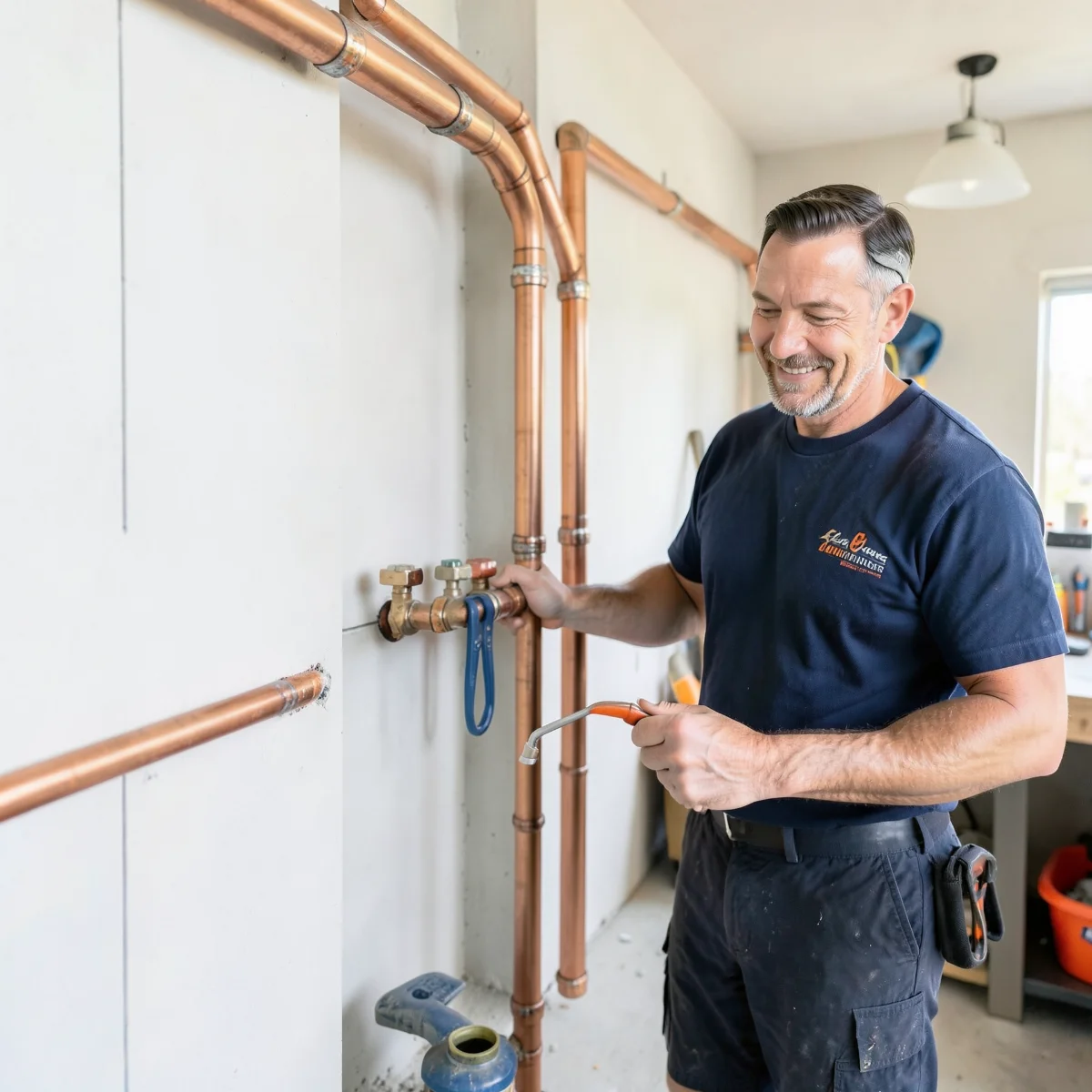
Copper repiping pulls out the old, corroded lines and replaces them with new copper that's built to last decades. It's the real fix, not a patch. And on the kind of clay and adobe soil we sit on here in Colton, doing it right the first time matters.
We're local plumbers. We've crawled under enough raised foundations off San Bernardino Avenue and snaked through enough slab homes in Cooley Ranch to know what's behind your walls before we open them up.
Why Your Old Pipes Are Failing
Galvanized steel and polybutylene were standard in older Colton neighborhoods, and both have the same problem: they don't age well. Galvanized rusts shut from the inside, choking your flow until two faucets can't run at once. Polybutylene gets brittle and splits. Either way, you end up with low pressure, discolored water, and pinhole leaks that show up behind drywall where you won't catch them until the damage is done.
Our hard Inland Empire water makes it worse. The scale builds up inside those aging pipes year after year, narrowing them like cholesterol in an artery. Add in the clay soil that swells and shrinks with every wet winter and dry summer, plus the ground shifting under us when the earth moves, and old fittings loosen and joints crack. A pipe that was fine last spring can spring a leak this fall.
Here's the straight answer: spot-patching a system that's failing all over is throwing good money after bad. When we repipe in copper, we replace the whole network of supply lines, swap out worn shutoff valves, pressure-test every joint, and put your walls back. You get consistent pressure at every fixture and clean water you can actually trust.
Signs It's Time to Repipe
- Rust-colored or brown water, especially first thing in the morning
- Pressure drops hard when two fixtures run at the same time
- Recurring pinhole leaks or water stains showing up on walls and ceilings
- Your home was built before the 1980s and still has its original galvanized or poly pipe
- Visible corrosion, flaking, or green-blue crust on exposed pipe in the garage or crawlspace
- A plumber keeps patching the same lines over and over