You don't think about your sump pump until the water's already coming up. One heavy storm rolls through off the I-10, the ground out by Reche Canyon and South Colton soaks through, and that little pump in your basement or crawl space is the only thing standing between you and a flooded floor.
Here's the catch. Most folks never test the thing. It sits down there for months, sometimes years, and the first time it gets asked to do its job is the worst possible moment to find out it can't.
We install, repair, and test sump pumps for homes all over Colton, and we do it before the rain shows up, not after. Same-day appointments when we have them open, and a straight answer on whether yours has another season left in it.
Why Sump Pumps Quit Right When You Need Them
A sump pump is a simple machine, but Colton is hard on it. Our soil is clay and adobe that swells when it's wet and pulls back when it's dry, and that constant shifting works grit and sediment down into the pit. That sludge clogs the intake and burns out the motor. Hard water doesn't help either. The same scale that builds up in your water heater coats the float switch and the impeller until the pump can't sense the water or move it.
Then there's the part nobody likes to hear. A pump that runs maybe a dozen times a year still ages. The float gets stuck, the check valve fails and lets water flow back into the pit, the discharge line clogs, or the whole unit just seizes after seven or eight years. When the storm finally comes, it draws no power and you're bailing by hand.
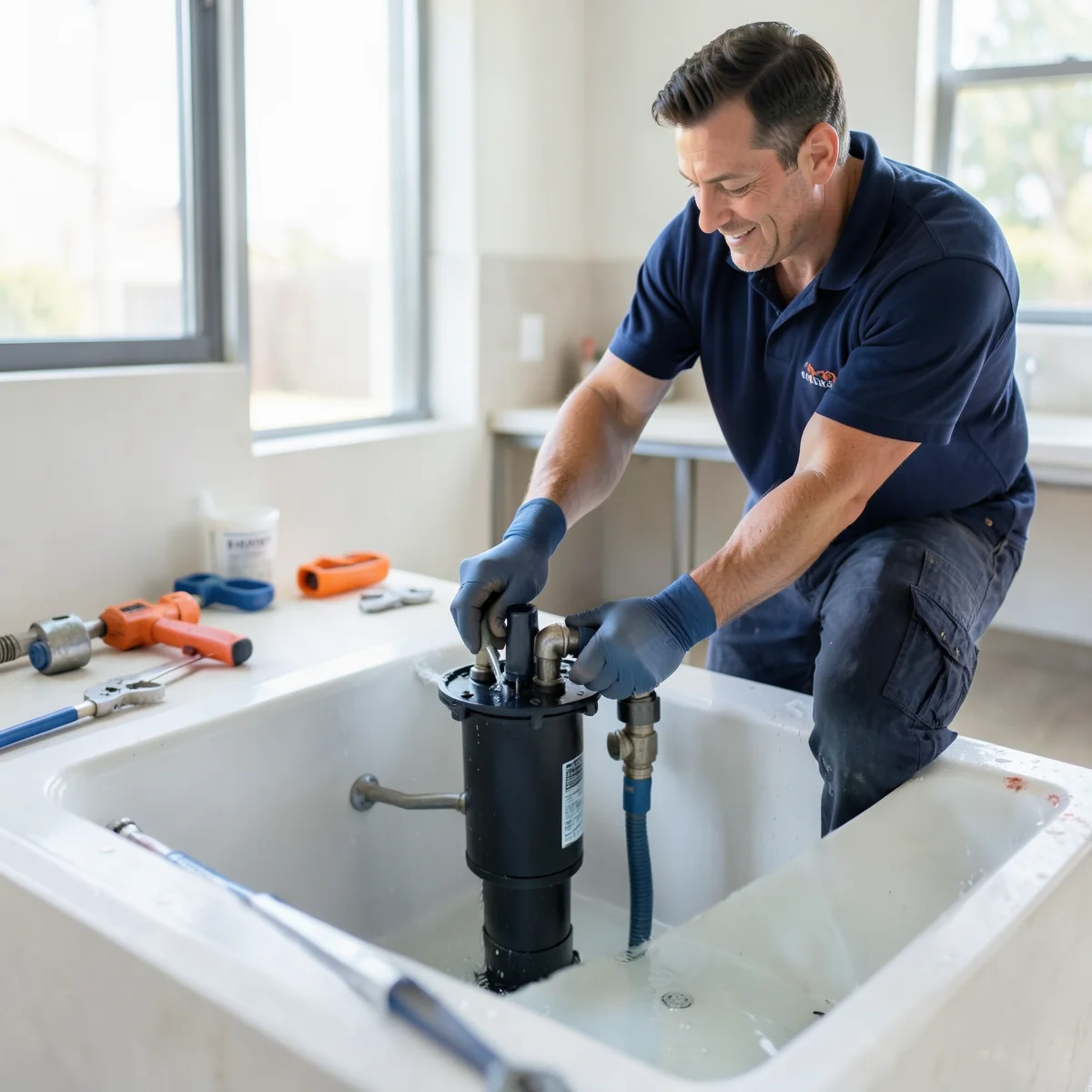
We fix it the honest way. We pull the pump, check the float and the check valve, clear the pit and the discharge line, and test it under real water before we leave. If yours is worn out, we tell you and we show you why. If it just needs a new switch or a cleaned-out line, that's all you pay for. We're not on commission, so we're not selling you a pump you don't need.
Signs Your Sump Pump Needs Attention
- It runs constantly, cycles on and off rapidly, or hums but never moves water.
- You hear grinding, rattling, or no sound at all when you pour water into the pit.
- Water sits in the pit after the pump should have cleared it, or backs up into the discharge line.
- Rust, visible sediment, or a musty smell is building up around the basin.
- The pump is over seven years old and has never been tested or serviced.
- Your basement or crawl space smells damp even when it hasn't rained in weeks.